Researchers at East Tennessee State University’s Gray Fossil Site & Museum have published new research that revises the known history of short-faced bears by more than a million years.
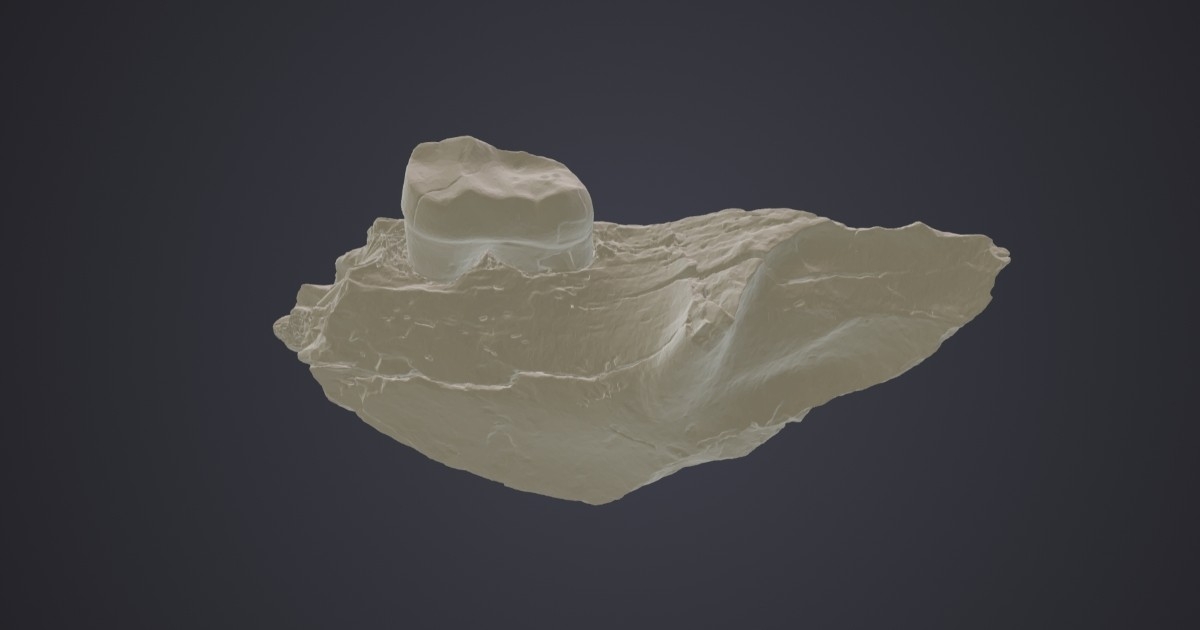
The study, published in the journal PaleoBios by Drs. Blaine Schubert and Joshua Samuels, re-examines a fossil jaw collected in Oregon more than a century ago. Using detailed anatomical study and modern microCT imaging, the researchers determined that the fossil cannot be identified as Plionarctos, an ancestral short-faced bear, as scientists had believed for decades.
That finding changes the timeline for the earliest known short-faced bears.
The spectacled bear of South America is the only living member of the short-faced bear group, or Tremarctinae, but the group has a rich fossil record in North and South America. Its best-known member is the giant short-faced bear, Arctodus simus, found at Ice Age sites across North America.
Older and rarer members of the group include Plionarctos, whose fossils have also been discovered at Tennessee’s Gray Fossil Site.
The fossil at the center of the new study was collected during expeditions to what is now John Day Fossil Beds National Monument in Oregon. In the late 19th and early 20th centuries, museums and universities from across the country sent teams to the area in search of fossils.
A University of California expedition led by paleontologist John C. Merriam collected thousands of specimens, including a mysterious jaw in 1916. The jaw contained a single tooth that resembled those of bears. Still, other features left researchers uncertain whether it belonged to a bear or to a member of the extinct bear-dog family, Amphicyonidae.
The specimen remained in the University of California Museum of Paleontology collections for decades without further attention.
Roughly 75 years after it was first described, two studies identified the jaw as belonging to Plionarctos and estimated it to be 7 million years old. That made the specimen the earliest known record of a short-faced bear.
Over the next quarter century, researchers cited the fossil in studies of bear evolution and used its age to help calibrate evolutionary timelines and date fossil sites across North America. Because Plionarctos was among the first animals discovered at the Gray Fossil Site, the Oregon specimen also helped inform early interpretations of the Tennessee site’s age.
As part of ongoing research into the evolution of short-faced bears, Schubert and Samuels returned to the historic Oregon fossil.
They examined the jaw in detail and used microCT scan data to study its internal anatomy. Although the second molar resembles those of bears, the structure of the jaw, absence of a third molar and lack of internal evidence that a third molar ever developed distinguishes the specimen from known short-faced bears.
The researchers found enough evidence to place the fossil within the bear family, Ursidae, but not enough to identify it as Plionarctos or even as a member of the short-faced bear group.
As a result, the earliest known short-faced bear fossils are now approximately 5.6 million years, more than a million years younger than previously thought. The finding also means that some fossil sites dated in part by the presence of these bears may be younger than previously thought.
“When this bear fossil was discovered and added to the University of California collection, those paleontologists knew it had potential to help us understand the past but no idea of how future scientists might use it,” said Samuels, head curator at the Gray Fossil Site & Museum and former chief of paleontology at John Day Fossil Beds. “More than 100 years later it was studied using new technology, allowing us to reconsider what we thought we knew.”
For Schubert, director of the Gray Fossil Site & Museum, the study also illustrates the lasting scientific value of museum collections.
“This study is a great example of what historic museum collections have to offer, and it underscores the value of caring for museum collections long term,” Schubert said. “This historic fossil specimen is contributing to ongoing research and improving understanding of bears through time, including those that once lived here in Tennessee.”
The study is the latest in a growing body of research from paleontologists at the Gray Fossil Site & Museum, where ongoing discoveries continue to expand scientists’ understanding of ancient ecosystems in Appalachia and beyond.
The research is part of ETSU’s broader commitment to discovery and scholarship as the flagship institution of Appalachia. To read more about the discovery, visit https://doi.org/10.5070/P9.63658.