

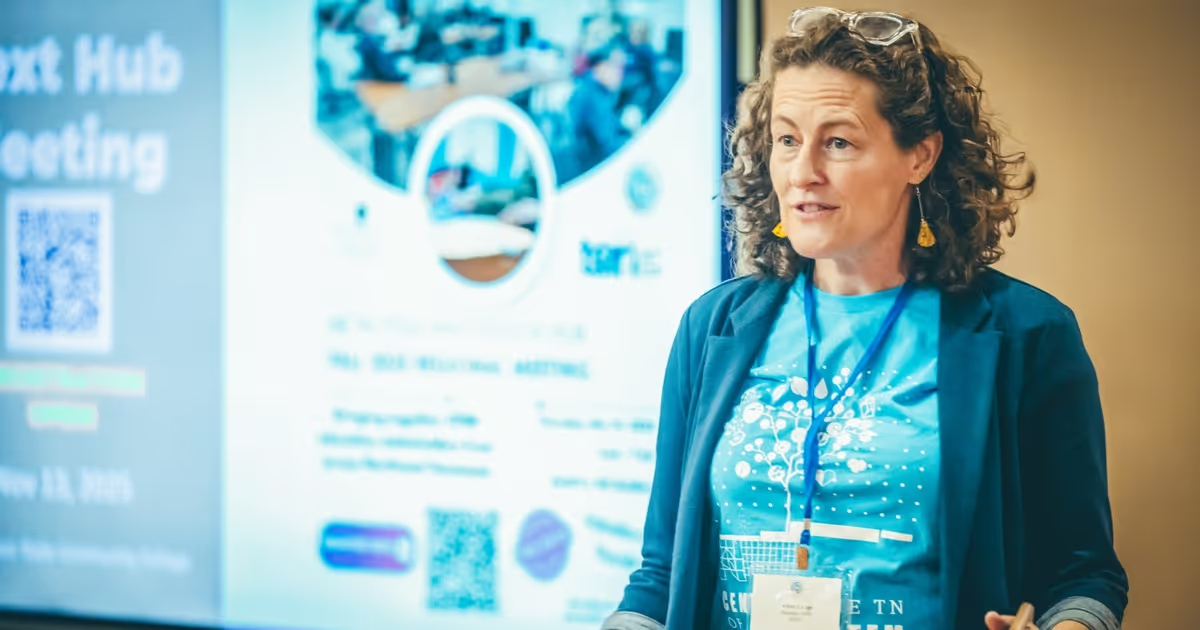
Work by ETSU’s Dr. Alissa A. Lange shows how preschool STEM education builds transferable skills, supports social-emotional learning and fosters belonging in early childhood classrooms.
When two preschoolers stack sticks and bark to build a house for a ladybug, they’re learning far more than basic construction.
They’re developing frustration tolerance when materials fall over.
They’re collaborating as they test ideas together. They’re building persistence as they redesign and try again.
This is the power of STEM education, short for science, technology, engineering and mathematics, in early childhood.
And it’s the focus of a new chapter published by Dr. Alissa A. Lange, director of East Tennessee State University’s Center of Excellence in STEM Education and the Early Childhood STEM Lab, and colleagues. This work builds on Lange’s more than 15 years of research, program evaluation and professional learning experience, now housed at EC STEM Lab.
Lange’s chapter, "Preschool STEM Teaching and Learning That Builds Transferable Skills, Supports SEL, and Cultivates Belonging," appears in the newly published book “Preschool Education in the 21st Century: Innovative Insights, Strategies and Practical Approaches.”
The open-access publication offers educators nationwide practical strategies for integrating STEM into preschool classrooms while supporting children’s development across multiple domains.
Research that bridges campus and classroom
Lange co-authored the chapter with four collaborators representing an incredible spectrum of early childhood education:
• Amie Perry, a current ETSU doctoral student in the Early Childhood Education Department (ECED)
• Kehinde Helen Orimaye, a recent graduate of ETSU’s ECED doctoral program
• Liria Caesar, a practicing preschool teacher in New Jersey
• Autumn Shaffer, a Virginia-based researcher applying to the ECED doctoral program.
The collaborative authorship reflects ETSU’s commitment to research that matters in real classrooms and the EC STEM Lab’s ongoing commitment to professionalize the early childhood workforce. Too often, the field is underappreciated for its critical role not only in nurturing the learning, development and well-being of children, but also the fundamental role that high-quality early childhood educators play in society more broadly (see more from the CSCCE).
“This work brings together researchers, graduate students and classroom teachers to share what actually works with young children,” Lange said. “These are real examples from real classrooms. We are passionate about featuring teachers’ work. We must raise up the voices, brilliance and expertise of the educators of our youngest learners.”
The chapter challenges common assumptions about preschool STEM education.
Rather than focusing solely on content knowledge – learning facts about butterflies, for example, or counting to 20 – the authors demonstrate how STEM experiences build critical thinking, social-emotional skills and habits of mind that transfer across all areas of learning.
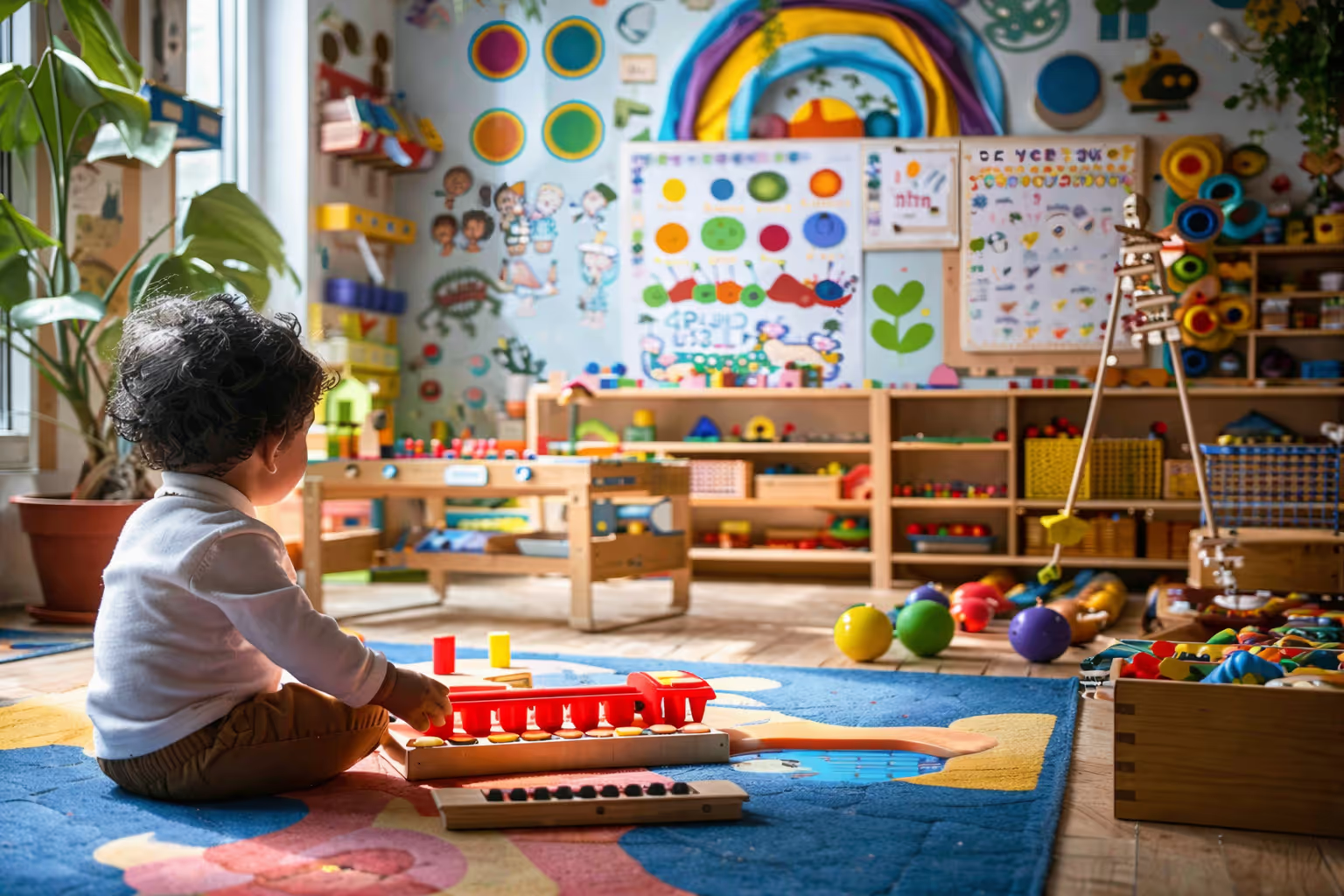
Real-world examples
The chapter includes vivid classroom examples.
In one instance, Perry describes working with children at Seedkeepers Forest School, where they discovered a salamander near a creek. Perry connected the class with a salamander researcher, Dr. Trevor Chapman, who joined the group for a search. One child later told his mother he wanted to become a salamander researcher when he grew up.
Another example follows an eight-week unit on popcorn and movies developed by Caesar in response to student interests. Children measured popcorn, engineered a pretend popcorn machine from recycled materials, conducted taste tests, and explored the science of how different-colored kernels pop. Many activities were conducted in English and Spanish, with most students speaking both languages. The unit culminated in a red-carpet movie premiere for families.
Throughout, the authors emphasize that effective STEM teaching starts with educator mindsets.
“We as teachers need to give ourselves permission not to know the answers and to commit to going through the process of figuring it out with our students,” the authors wrote.
The chapter is freely available online, ensuring that educators, researchers and families can access the practical strategies it contains.
For ETSU, the publication represents another milestone in the university’s growing reputation for research that makes a tangible difference in classrooms and communities.
“ETSU is committed to research that meets children and educators where they are, and this work shows how powerful early learning can be when it’s rooted in curiosity and connection,” said Dr. Janna Scarborough, dean of the ETSU Clemmer College of Education and Human Development. “Dr. Lange’s research demonstrates how STEM education builds not only knowledge, but the social and emotional skills children need to thrive.”
.avif)