

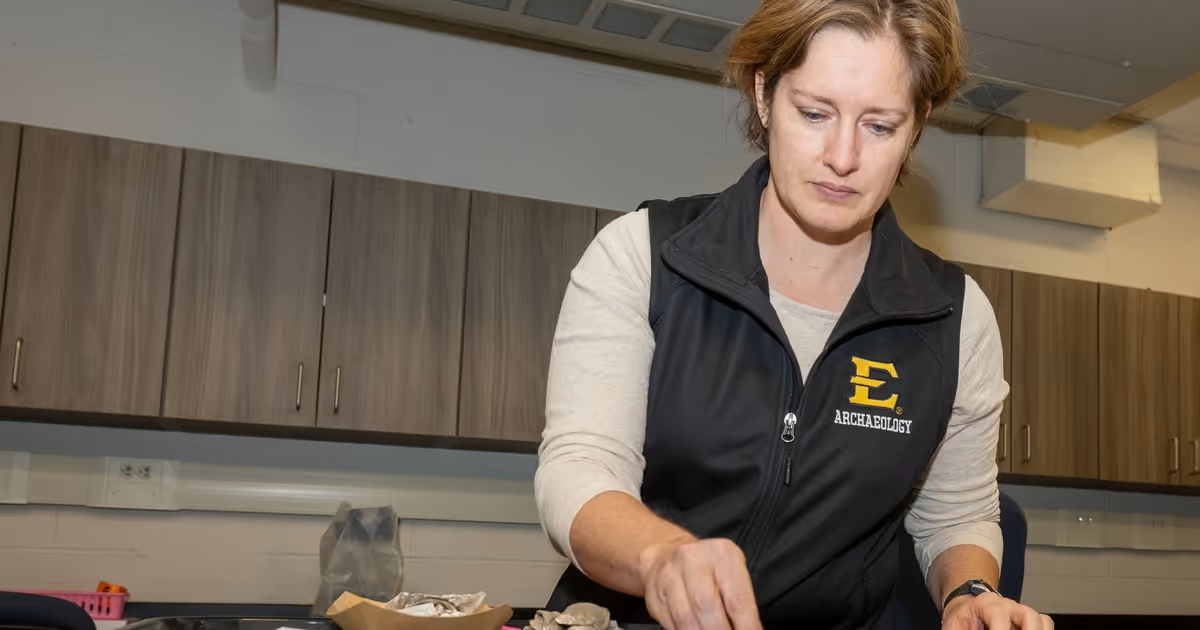
ETSU anthropology professor Dr. Lindsey Cochran earned the Society for Historical Archaeology’s 2026 Mark E. Mack Community Engagement Award for community-informed heritage preservation research.
When rising seas threaten thousands of years of human history along a vulnerable coastline, how do communities and researchers work together to protect what can be saved?
That question drove Dr. Lindsey Cochran’s work along Florida’s Apalachicola Bay, where she built digital models predicting how sea level rise will reshape both coastal ecosystems and the archaeological record they contain.
That approach – combining technical modeling with sustained community conversation – earned the Society for Historical Archaeology’s 2026 Mark E. Mack Community Engagement Award, a national honor recognizing outstanding collaboration between researchers and communities in heritage preservation.
“A core principle of the People of the Apalachicola System is service,” said Cochran, assistant professor of anthropology at East Tennessee State University. “Community conversations help the scientific community understand which cultural resources are most important to local groups. The Apalachicola River and Bay system holds over 12,000 years of human history, and when resources are threatened, these conversations help us understand community priorities.”
The award underscores ETSU's commitment to research that serves both academic inquiry and public need, work that defines the university’s role as the flagship of Appalachia.
Mapping loss before it happens
With sea levels rising and coastal landscapes changing, archaeologists face a daunting challenge: limited resources to address widespread threats to cultural heritage sites.
Cochran developed Geographic Information Systems (GIS) models that project sea level impacts across the Apalachicola Bay region, specifically within the National Oceanic and Atmospheric Administration (NOAA) Apalachicola National Estuarine Research Reserve. Her models identify cultural resource locations as threatened, damaged or destroyed based on temporal projections.
The technical work alone represents significant scholarship. But Cochran’s team took the critical next step. They brought the data back to the community.
Residents share a deep connection to the region’s fisheries, historic structures and waterfront traditions. They also described ongoing economic and environmental pressures transforming the landscape they know.
“These conversations integrate with the modeling to provide key information that supports ongoing dialogue with Apalachicola communities,” Cochran said. “Increased knowledge of current and historical resource users helps bolster interpretive and educational programming, especially when facing intensifying economic and ecological challenges.”
The result was a community-informed approach to heritage preservation that prioritizes local values alongside archaeological significance.
Training students for real-world impact
Cochran’s research directly shapes how ETSU prepares the next generation of archaeologists.
“Archaeology is a dynamic discipline that often requires brain and brawn,” she said. “One day I may build a model in GIS, and the next I may be clearing a transect in the jungle.”
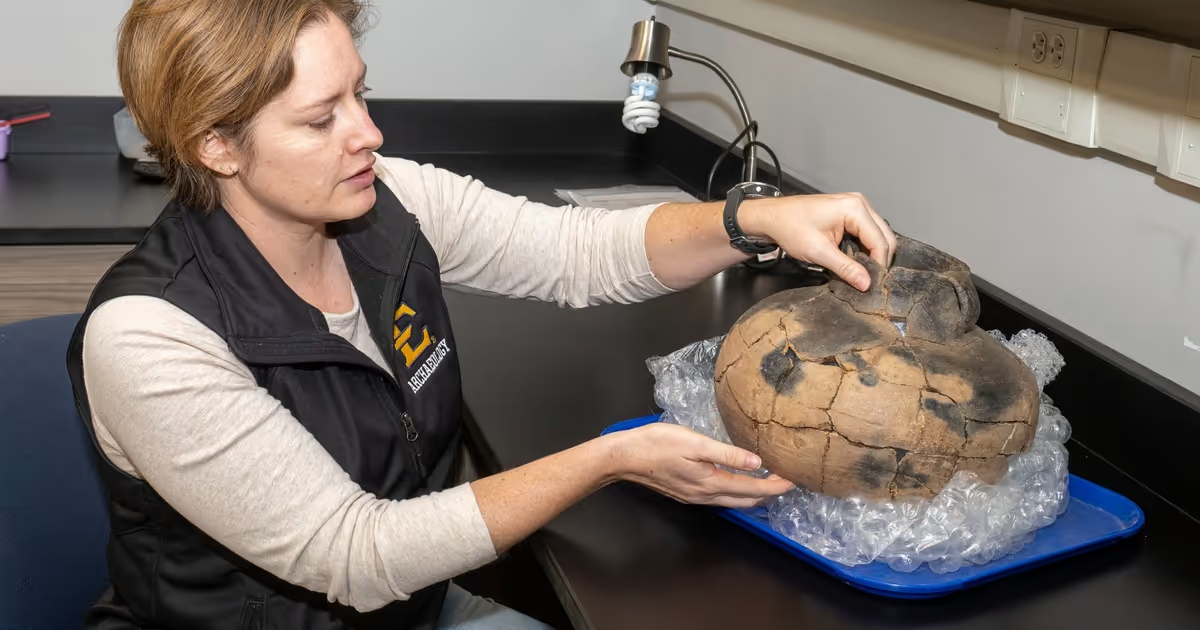
ETSU archaeology students work on real projects with tangible outcomes. In the Ball Hall Laboratory, for example, they process artifacts from annual field schools at Cumberland Island National Seashore.
Students also engage directly with communities. In the past year alone, ETSU archaeology students volunteered on hurricane recovery at Davy Crockett Birthplace State Park, led middle school students through archaeology-themed LEGO projects, guided laboratory tours and logged thousands of volunteer hours in research facilities.
“The field desperately needs people who are equally talented at technical writing as they are at fieldwork,” Cochran said. “ETSU archaeology students receive a practical education that prepares them for the realities of the field.”
Dr. Joe Bidwell, dean of the College of Arts and Sciences, emphasized that Cochran’s award reflects ETSU's broader research mission.
“Dr. Cochran’s work exemplifies the kind of scholarship we champion at ETSU: rigorous, collaborative and deeply engaged with the communities we serve,” Bidwell said. “This recognition from a leading professional society validates both her individual excellence and our institutional commitment to research that makes a difference.”
ETSU Provost Dr. Kimberly D. McCorkle connected the award to the university’s regional identity.
“As the flagship university of Appalachia, ETSU advances scholarship that addresses urgent challenges facing communities,” McCorkle said. “Dr. Cochran’s approach demonstrates how technical expertise and community partnership can work together to protect what matters most.”
Archaeology as service
For Cochran, the award validates a principle she brings to every project. Archaeology exists to serve communities, not just academic journals.
“Community conversation, outreach and education are cornerstones of archaeology,” she said. “ETSU students are doing real-world work that has real impact.”
The research team’s journal article summarizing the People of the Apalachicola project was recently accepted for publication, ensuring the methodology and findings will guide future heritage preservation projects in other vulnerable coastal regions.
.avif)