
If you have ever wanted to see a fossil dig in action, now is your chance.
East Tennessee State University paleontologists and students will be in Saltville, Virginia, this month, conducting fieldwork at a site well known for its Ice Age fossils – and the public is encouraged to attend and learn more about the site's history.
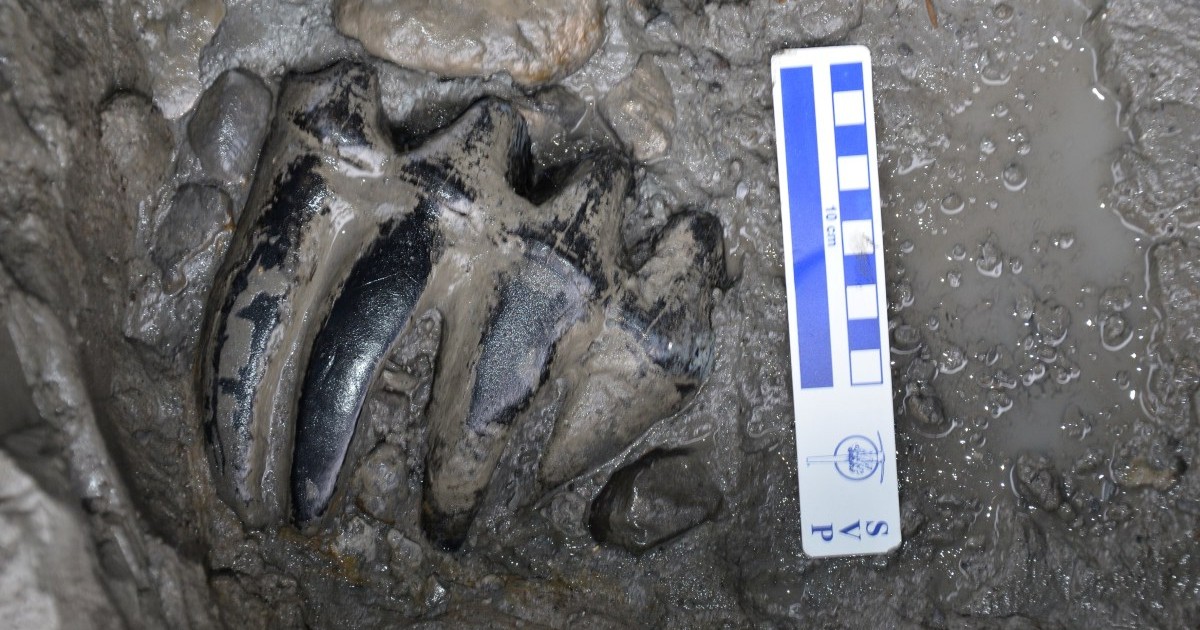
ETSU’s Dr. Blaine Schubert, director of the Gray Fossil Site and Museum, has periodically led excavations at the Saltville site, where they have recovered the remains on mastodons, giant short-faced bears, mammoths, giant ground sloths and other Ice Age-era animals.
“Saltville fossils are remarkably well preserved, allowing us to better understand Appalachian faunas and floras through time,” said Schubert, who also serves as the executive director of ETSU’s Center of Excellence in Paleontology. “This includes the last shift from a colder glacial environment to a warmer world, which coincides with an extinction event that wiped out most of North America's large animals around 12,000 years ago.”
That preservation has allowed researchers to obtain radiocarbon dates ranging from about 12,000 years ago to more than 40,000 years ago. Ancient DNA has also been recovered from fossils at the site and used to study relationships among extinct and living species.
“The discovery of well-preserved ancient DNA from Saltville fossils was a real game changer for studying Ice Age animals in eastern North America because very few sites from the region supply this level of preservation,” Schubert said.
Looking beyond the largest animals
This year’s excavation will continue the search for additional short-faced bear remains while also focusing on a sand layer rich in much smaller fossils.
Davis Gunnin and Shay Maden, assistant collections managers at the Gray Fossil Site & Museum and ETSU alumni, processed sediments collected during last year’s dig. Gunnin and Maden are crew chiefs for this year’s dig.
“The richness of this layer became clear as we screen-washed and sorted through sediment samples from last year,” said Gunnin.
The layer has produced remains of snakes, salamanders, frogs, fish, insects and plants.
“Thus far, the sand layer primarily indicates an aquatic setting at the end of the last Ice Age,” Maden said. “The preservation of plants and insects is extraordinary, and study of this unique fauna will provide a foundation for interpreting aquatic environments in the Appalachians from the Ice Age to the present.”
New to this year’s team is Dr. Joshua Samuels, associate professor of geosciences at ETSU and head curator at the Gray Fossil Site & Museum.
“With the discovery of the smaller fauna, we have an important opportunity to study all of the mammals that lived in Appalachian valleys during the last Ice Age,” Samuels said. “The Saltville material will fill an important void in our knowledge of mammal communities that occupied valleys and wetlands as the Ice Age was coming to a close.”
Visit the dig
During excavation days, ETSU researchers will be available to answer questions from the public between 10:30 a.m. and 4:30 p.m. Researchers started at the site on Tuesday, and will continue through Saturday, Oct. 10. The team will return Oct. 12-16.
Visitors can reach the dig area by walking along the Helen Williams Barbrow Interpretive Trail through Saltville. The Museum of the Middle Appalachians is also recommended as a stop before or after visiting the site to learn more about the excavation and the town’s history.
ETSU and the museum will also host a Kids’ Dig on Oct. 17. For details about that event, contact the Museum of the Middle Appalachians.
.jpg)
.jpg)