
ETSU’s 2025 Three Minute Thesis 3MT® competition highlighted impactful graduate research, from a rare young rhino fossil to national public health disparities.
Joseph Gajewski stood in front of an audience with just three minutes and one slide to explain years of painstaking research.
His subject?
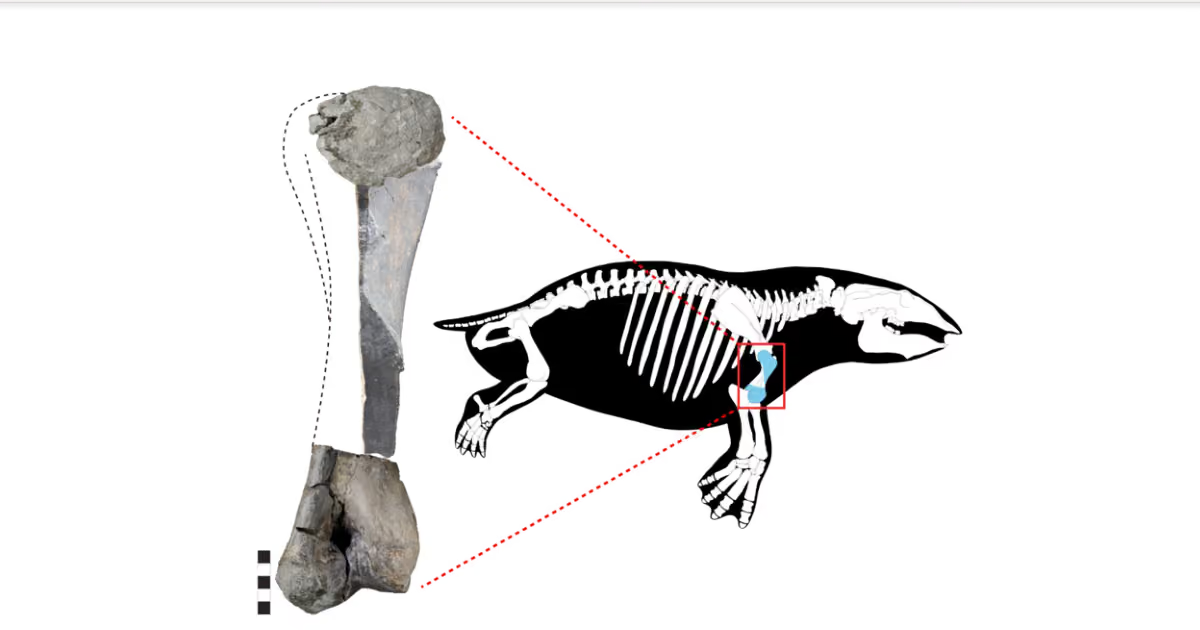
A five-million-year-old rhinoceros that once roamed what is now Northeast Tennessee, and the mystery hidden in its teeth.
The fossil skeleton Gajewski studied represents the first young rhino of its species ever discovered, unearthed at East Tennessee State University’s renowned Gray Fossil Site & Museum. But something about this ancient animal didn’t make sense. Young rhinos of this age are typically almost fully grown, reaching roughly 90% of their adult size. The Gray specimen was much smaller, closer to 70%.
What did the young rhino fossil reveal?
That unusual difference sent Gajewski searching for answers. He compared the fossil with rhinos in museum collections across the country, looking for clues that might explain the stunted growth. The key insight came from an unexpected source: the young rhino’s teeth.
“We found enamel defects that point to periods of physiological stress occurring during tooth formation, which would have been around birth,” Gajewski said. “Those early-life challenges may have slowed skeletal development.”
The finding offers rare insight into how ancient animals responded to stressors. That’s information that not only strengthens paleontological understanding but also fosters public appreciation of the region’s natural history.
What is ETSU’s Three Minute Thesis 3MT® competition?
Gajewski’s work earned first place in ETSU’s 2025 Three Minute Thesis 3MT® competition, an annual celebration of graduate scholarship that challenges students to distill complex research into compelling, accessible presentations
“This award reaffirms my beliefs that the people of Tennessee are truly interested in the natural history of the region,” he said. “Knowledge of past life, no matter how insignificant it may seem, contributes greatly to public science education and, in turn, conservation efforts, efforts that are becoming increasingly relevant in a world where wildlife is threatened.”
What other research was featured among ETSU’s finalists?
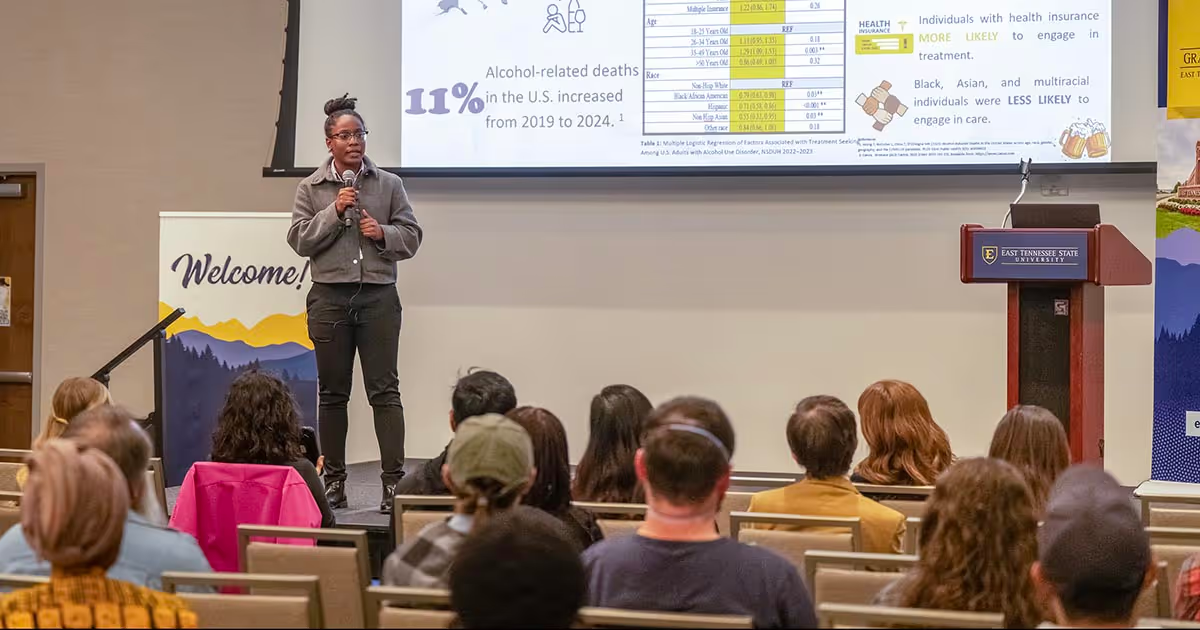
While the 3MT® showcase, organized by ETSU’s Emily Redd, spans the full spectrum of ETSU’s graduate programs, this year’s finalists highlight the extraordinary range of research being undertaken across campus. Among them was public health doctoral student Nikita Cudjoe, whose work examines who does – and who does not – receive treatment for alcohol use disorder.
Analyzing national survey data from more than 9,600 adults, Cudjoe identified key factors shaping treatment engagement. Those included severity of symptoms, insurance coverage, age and persistent racial disparities. Her findings highlight structural barriers that persist and continue to affect communities nationwide.
“While this study answers who seeks treatment, future research should focus on understanding why,” Cudjoe said. “This award is meaningful because it affirms my commitment to not only analyzing disparities in treatment access, but also communicating those findings in ways that resonate with communities and policymakers.”
Her words reflect a broader theme emerging from this year’s graduate research: scholarship with regional relevance and national impact.
What does this research say about ETSU’s graduate programs?
For Dr. Sharon James McGee, dean of the Graduate School, that commitment to meaningful, publicly engaged research defines ETSU’s graduate programs.
“Our students are asking bold questions and pursuing work that makes a tangible difference,” McGee said. “Whether they are uncovering clues about ancient ecosystems or addressing today’s most pressing public health challenges, their research exemplifies the power of graduate education to advance knowledge and strengthen communities.”
The 3MT® competition is only one window into the depth of graduate scholarship at ETSU, she said. Students across disciplines are conducting fieldwork, publishing in peer-reviewed journals, presenting at national conferences and collaborating with faculty on funded research projects.
“Graduate students are essential to the research mission of this university,” she said. “Their curiosity, dedication and perseverance drive discoveries that benefit our region and contribute to the global body of knowledge.”
Explore the ways ETSU students enjoy hands-on learning opportunities at etsu.edu/go-beyond.
How do I get information about graduate school?
Ready for the next phase of your career? ETSU offers numerous graduate programs.
Explore the possibilities at etsu.edu/gradschool.
.jpg)