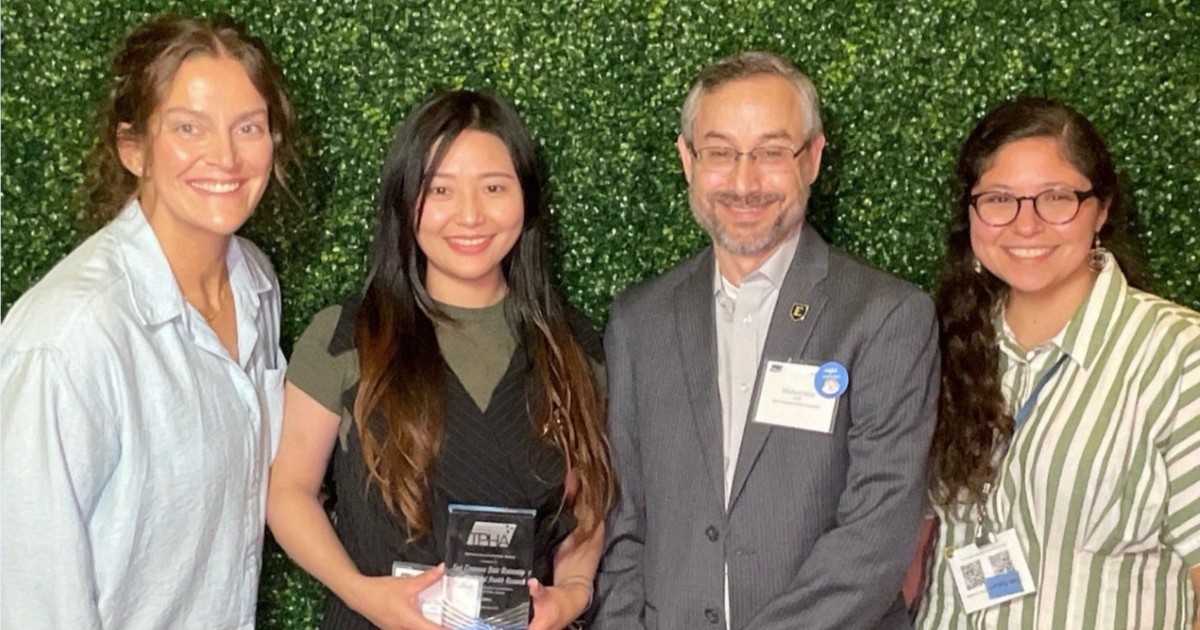

ETSU’s first iGEM team earned global recognition in Paris for innovative synthetic biology research aimed at addressing hidden hunger and advancing hands-on learning opportunities.
The moment came right after their live presentation.
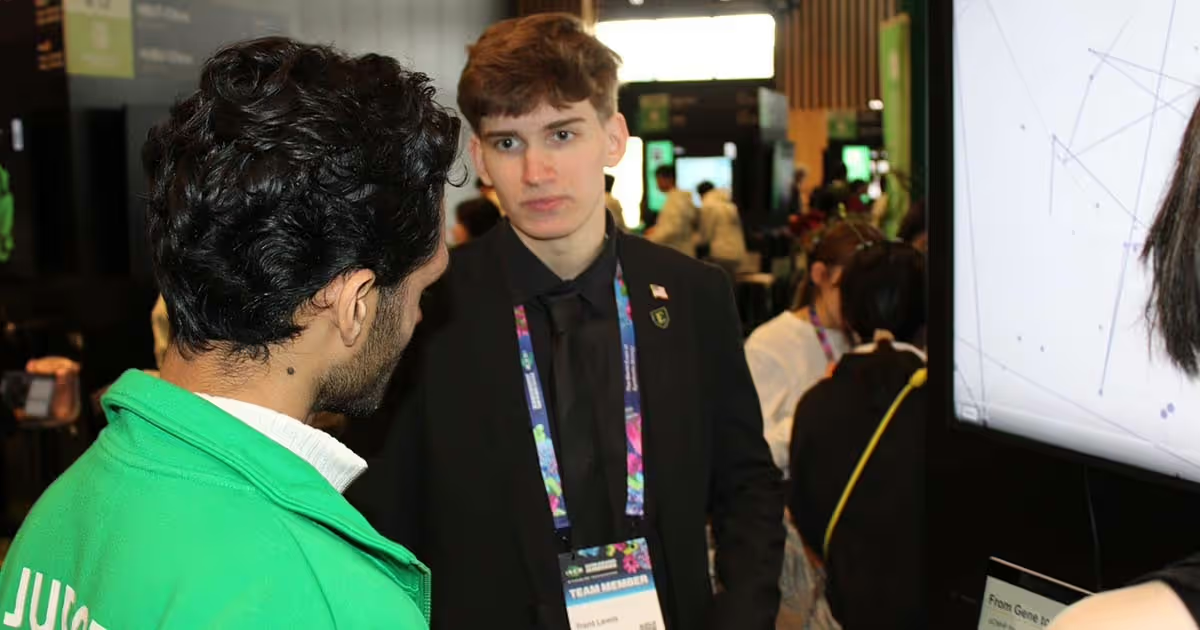
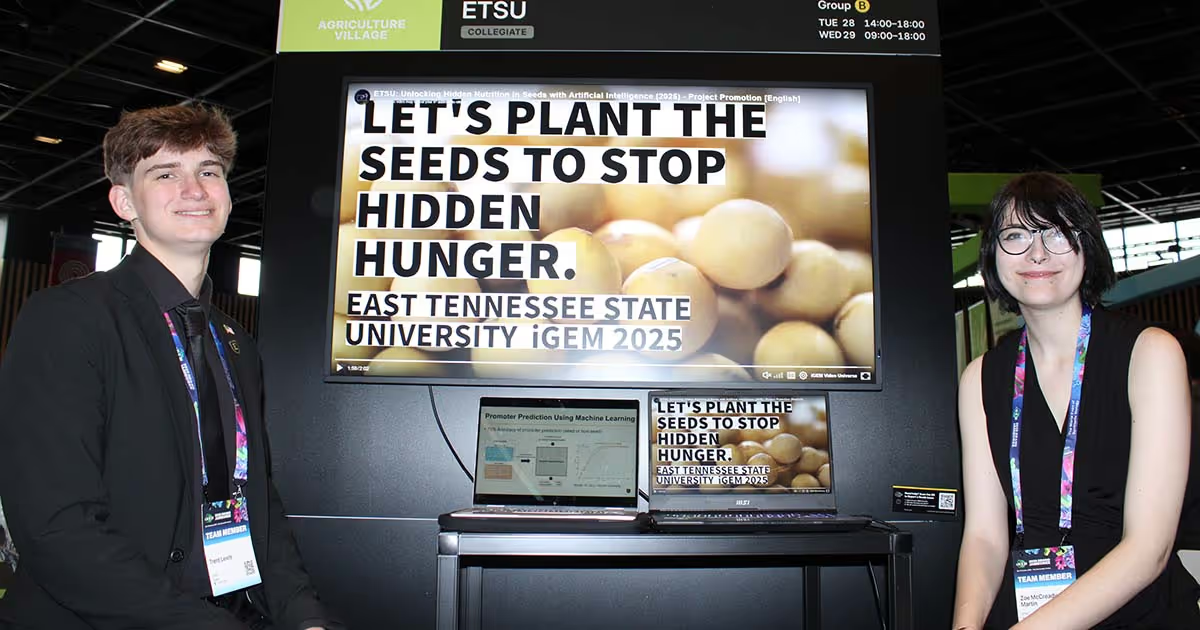
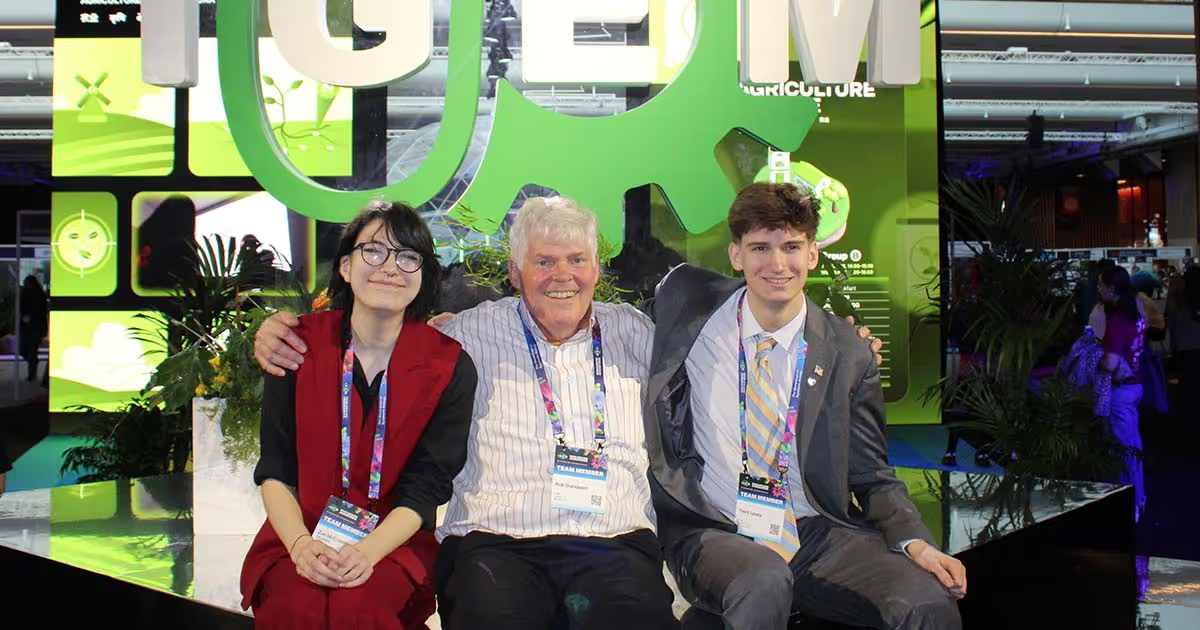
As students Zoe McCready and Trent Lewis stepped away from the stage, attendees at the International Genetically Engineered Machine (iGEM) competition approached with questions – not just about their groundbreaking research on hidden hunger, but about East Tennessee State University itself.
“One big question was, ‘Oh, ETSU? What’s that? Where’s it located?’” McCready said. “So, we got to say, ‘We’re from this town in the mountains in Johnson City, Tennessee.’”
That moment of pride, rooted in sharing ETSU’s story with researchers, students and biotech professionals from around the world, encapsulated what the Oct. 28-31 competition meant for the university’s first-ever iGEM team.
It wasn’t just about showcasing innovative science. It was about establishing ETSU as a player in the global synthetic biology community.
ETSU team addresses global nutrition challenge
The full ETSU team includes students McCready, Lewis, Cristiana Martinez, Elliot Fry, Emma Wallen, Connor Cole and John Flaifel.
McCready and Lewis got the chance to present research addressing micronutrient deficiencies, or “hidden hunger,” affecting over two billion people worldwide. Unlike starvation, hidden hunger stems not from lack of food but from diets lacking essential vitamins and micronutrients.
The team’s innovative approach: engineer soybean seeds to produce beta-carotene (which produces vitamin A in humans) without creating genetically modified organisms. The project builds on breakthrough work by Dr. Tianhu Sun, ETSU assistant professor in the Department of Biological Sciences, who received the prestigious Foundation for Food & Agriculture Research New Innovator Award for his research on naturally boosting vitamin content in seeds.
A transformative experience
For both McCready and Lewis, the Paris experience proved transformative, personally and professionally. McCready had never been on a plane before the trip. Lewis had never traveled outside the country. Yet within days of arriving, they were presenting cutting-edge research to an international audience.
“Having to go there, figure out how to navigate that area, what the culture really is like, and then going in one day later and presenting this research, and having that sort of pressure of representing not only your country, but also your university, was really enriching,” Lewis said.
Building something lasting
The team’s success represents years of groundwork laid by dedicated faculty mentors and student leaders.
Dr. Bob Standaert, professor and chair of the Department of Chemistry, helped launch the effort after recognizing exceptional potential in a group of biology majors in his organic chemistry class a couple of years ago.
Additional inspiration came from MIT’s Dr. Natalie Kuldell and her BioBuilder Education Foundation. Dr. Aruna Kilaru and Provost Kimberly D. McCorkle helped secure crucial funding to make the Paris trip possible.
Support came from a variety of sources, including a BioMADE grant, College of Arts and Sciences, the ETSU Office of the Provost, the Office of the Vice Provost for Research, the ETSU Research Corporation and community members. And Sun provided the groundbreaking research foundation that made the project scientifically viable. He framed the problem and then provided critical hands-on supervision of students in the lab.
“I actually never would have discovered iGEM or even been exposed to synthetic biology/bioengineering as a career prospect if it weren’t for a seminar about BioBuilder at ETSU, and a meeting Natalie Kuldell had with interested undergraduates at the time. I have learned so many key concepts and techniques through the synthetic biology minor,” McCready reflected. “To be able to represent our region truly is an exceptional honor and privilege. Laying the framework as a team and setting the stage for ETSU’s participation in the iGEM competition has been a priceless opportunity.”
Just as important, the team has established a foundation for future ETSU students to build upon. The students are already planning to expand the club, recruit new members and compete again.
ETSU is already actively involved in the synthetic biology space, thanks in large part to the ETSU Research Corporation, which helps bring industry partnerships, innovative projects and applied research opportunities directly into the hands of ETSU students and faculty.
How can I support or join the iGEM team?
ETSU students interested in joining the iGEM team can email Sun at sunt02@etsu.edu.
Community members who want to support the team’s groundbreaking work can make a donation via Give Campus. Donors should note in the comments that their contribution is for iGEM.
To read more about the ways ETSU students are getting critical hands-on learning experiences, visit etsu.edu/go-beyond.
.jpg)
.jpg)