
Discover how ETSU is incorporating narrative medicine into health sciences education, teaching students how storytelling helps patients feel heard, reduces provider burnout and enriches health care education.
Aleeha Atif, a junior at East Tennessee State University from Jonesborough, is putting into practice a concept called narrative medicine that she learned in the classroom.
The biomedical health sciences major with a minor in culture and health has established a new chapter of the Dementia Art Therapy Alliance student organization at ETSU.
Atif and other members frequently visit a memory care facility, where they do simple arts and crafts projects with patients.
“We encourage our members to start with small talk – usually light conversation about the weather or the color of nail polish the patient has on,” said Atif, who aspires to attend medical school. “That small talk often grows into something more meaningful as residents begin to open up and share bits of their lives. Some who were initially reserved now join us eagerly and chat freely while we paint together.
“For us, that’s where narrative medicine comes in. Not through uncovering forgotten memories, but through empathy, presence and genuine listening that allow a meaningful connection to form.”
What is narrative medicine?
Everyone has a story – and sometimes many stories – related to health care. Many conversations among friends, family and colleagues come around to stories of sports injury, childhood illness or family members’ health struggles. It seems only natural that patients and health care practitioners would share these stories in clinical settings.
The field of narrative medicine looks at the element of story and how it can be used as an effective tool in various branches of health care.
Dr. Melissa Schrift is a professor in the East Tennessee State University Department of Sociology and Anthropology and director of the university’s culture and health minor. She enjoys sharing the concept of narrative medicine with her students, most of whom plan careers in the health professions.
“Overall, I think about narrative medicine as a field where patient stories are central to both expressing illness on behalf of the patient and understanding illness better on behalf of the practitioner,” Schrift said. “For me, this comes from the idea that we have a bit of a crisis in Western medicine in terms of communication, and that most of the problems people have with compliance and seeing doctors and trusting doctors have to do with communication.”
She believes narrative medicine can help in this regard, benefiting both patients and practitioners across various health professions, from nurses to veterinarians.
Schrift identified three distinct components of narrative medicine that can benefit both patients and providers.
Narrative medicine: Patient stories
Getting a patient to briefly share the story of an illness or injury can not only help a clinician understand the patient and situation better, but also help build trust between the two.
“When people are sick and feel most vulnerable,” Schrift said, “they often come to encounters with physicians with a lay perspective, versus the learned perspective that a physician has gotten from medical school. These two approaches often clash in a clinical environment, so that patients often don’t feel heard. And we know that there is much better compliance with medical instructions when a patient feels heard.”
Schrift said that in narrative medicine, health care providers can ask patients questions that help them better understand their stories, such as:
• When do you believe your illness started?
• What do you fear most about your illness?
• What are some of the biggest problems your illness has caused?
Narrative medicine: Provider stories
A second aspect of narrative medicine allows doctors, nurses and other health care providers to tell their stories.
“A lot of different books are written by doctors in which they tell about their experiences, whether it’s high-drama experiences in the emergency room or working in global health,” Schrift said. “This is important because it gives physicians an opportunity to decompress from all of the stress that is involved in their jobs and express themselves. This may help in physician burnout, which is a real problem now in Western medicine.”
Narrative medicine: Literature as medicine
A third component of narrative medicine uses literature as medicine. Not only can literature provide patients with a momentary escape from focusing on an illness through laughter or intrigue with the lives of the characters in books, but literature can also be instructive in training future health care practitioners.
“For example, in my ‘Medical Humanities’ class, I’ll often use a book, like ‘Frankenstein’ or ‘The Death of Ivan Ilyich,’ to teach about doctor-patient relationships,” Schrift said. “I can often teach more about human nature using ‘Frankenstein’ than I can in just lecturing about communication skills.”
Narrative medicine at ETSU
Schrift has been one of the first faculty members at ETSU to incorporate narrative medicine into her courses, which include “Medical Humanities” and “Medical Anthropology.”
She assigns her students to create illness narratives. Each student interviews a family member about an illness they once had, and then reflects on it in writing.
“Doing that interview and writing about it – representing the illness – makes them think differently about it than if they just had a case history of a patient,” Schrift said. “Often they’ll talk to their parents, and they say they understand their parents in a very different way.
“Most of my students are pre-health students, and they always say they feel so much better-equipped going into medical school with some of this information and knowledge.”
In addition to Schrift’s courses, ETSU offers “Narrative Medicine,” taught by Dr. Brianna (Cusanno) August-Rae in the Department of Communication Studies and Storytelling, and “Literature as Medicine,” taught by Dr. Josh Reid in the Department of Literature and Language. And ETSU’s Quillen College of Medicine incorporates instruction in narrative medicine into Grand Rounds and courses that cover communication with patients.
Narrative medicine in action: Nurse Narratives
One great example of narrative medicine in action at ETSU is the Nurse Narratives Initiative.
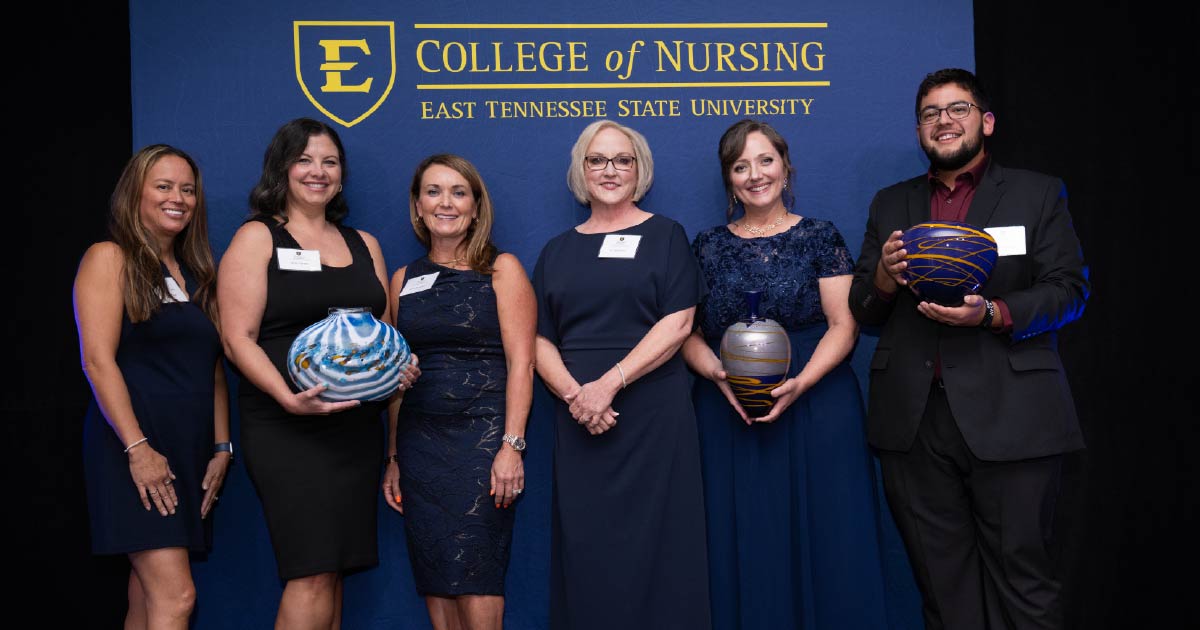
The nursing profession experienced tremendous strain during the COVID pandemic and its aftermath. The Nurse Narratives Initiative is a three-year project through which nurses share their stories on video, reminding viewers of the empathy, skill and dedication to the needs of others that the profession demands.
The project was brought about through a partnership between the Tennessee Center for Nursing Advancement, Ballad Health, StoryCollab and ETSU. Learn more about Nurse Narratives and link to the collection of story videos at etsu.edu/marketing/nurse-narratives.php.
_______________
This effort to improve health outcomes and the lives of both patients and health care providers is part of what makes ETSU a premier health sciences institution. With five colleges and more than 40 programs in the health sciences, ETSU offers a robust combination of academic programs and patient-care facilities that elevate health care education through interprofessional experiences.
%202.png)